
KILIMANJARO TREK The Lemosho Route
2024
INTRODUCTION
Mount Kilimanjaro lies on the border of Tanzania and Kenya, just south of the Equator. To the west lies the Great African Rift Valley, created by tremendous tectonic forces which also gave birth to a string of other volcanoes. One of these, Mount Kenya, was originally much higher than Kilimanjaro. The three summits of Mount Kilimanjaro, Shira, Kibo and Mawenzi are all of very recent origin.
Although East Africa and nearby Olduvai Gorge is thought to be the cradle of mankind it is unlikely that early man would have been attracted to the steep and cold slopes of Kilimanjaro at a time when it was probably very active and dangerous.
Lying just south of the equator, Kilimanjaro is affected by the passage of the Inter-tropical Convergence Zone, which brings with it the main rainy periods. The highest rainfall occurs between mid-March and early May, and slightly less between the beginning of November and late December. Maximum rainfall occurs in the forest belt and on the south side of the mountain where it reaches 2000mm. per year.
Precipitation on the summit is about 100mm. per year; this coupled with the very porous ash soils results in the Saddle being considered a high altitude desert. Rain and, higher up, snow, can however be encountered at any time of year – even in the driest periods (January, February and September).
Normally the drier seasons are associated with clear, dry weather which can last for weeks on end. The best weather is generally encountered in the mornings, and convectional rainfall, if any, tends to come in mid-afternoon. After long periods of dry weather some of the higher streams dry up.
Temperatures vary considerably with height and time of day. On the plains surrounding Kilimanjaro the average temperature is about 30°C. At 3000 m frosts can be encountered at night while day time temperatures range from 5 to 15°C. Night time temperatures on the summit can be well below freezing.
When to go . . .
Anytime! All seasons have their attractions – a good day in the rainy periods can sometimes provide superb views as the air is then very clear, however deep snow and heavy rain could stop or marr your trip. The safest months are: mid-December to mid-March then June to October.
The Lemosho Route …
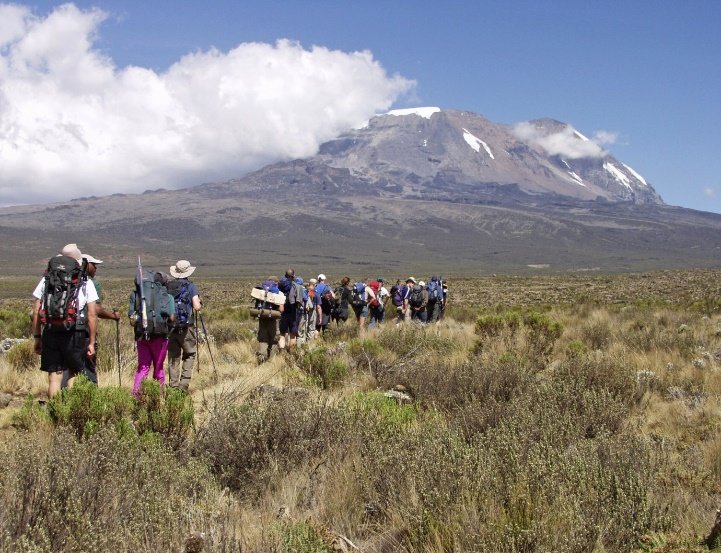
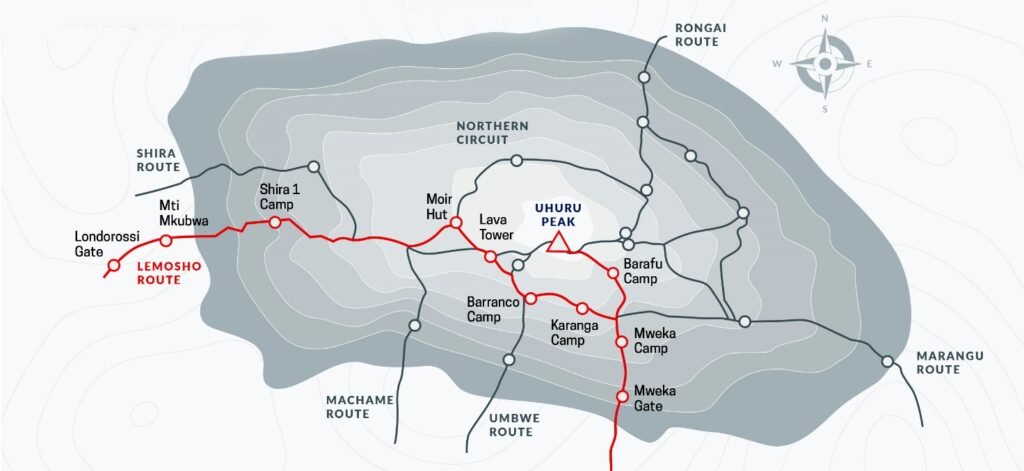
There are several routes to attempt Kilimanjaro from. The Lemosho Route is considered the most scenic trail on Kilimanjaro, granting panoramic vistas on various sides of the mountain. As one of the newer routes, Lemosho is a superb choice for your climb. It is our preferred route due to its ideal balance of low crowds, beautiful scenery and the highest summit success rate. The route approaches Mount Kilimanjaro from the west, beginning with a long drive from Moshi to Londorossi Gate. From there, the first two days are spent trekking through the rain forest to Shira Ridge. The Lemosho route crosses the entire Shira Plateau from west to east in a pleasant, relatively flat hike. Crowds are low until the route joins the Machame route near Lava Tower. Then the route traverses underneath Kilimanjaro’s Southern Ice Field on a path known as the Southern Circuit before summiting from Barafu. Descent is made via the Mweka route.
FEATURES
- Total Duration : 9 Nights / 10 Days (On trek 8 days/ 7 nights)
- Style of Trip : Trekking
- Grade : Challenging
- Maximum Altitude : 5,895 m / 19,500 ft
- Best Season : December - March and June- Oct
- Accommodation : Hotel – 02; Organized Camping – 07
- Food : On trek – All meals included; Hotel – Breakfast and dinner
- Travel: In small non-AC vehicles
Start Your Trip Now!
ITINERARY IN BRIEF
You will be met by some of your team at the airport and transferred to your hotel for dinner. After that, your guide will brief you and you will have time to prepare your bags for tomorrow’s climb. Put all that you need for the summit, and the higher altitudes in a waterproof bag (max 16 kgs), which will be carried by the porters throughout the climb. Your personal belongings, camera, passport, anything you need while hiking will go into your small waterproof day pack. Anything you need for the rest of your holiday can be left with us and locked in our office lock up.
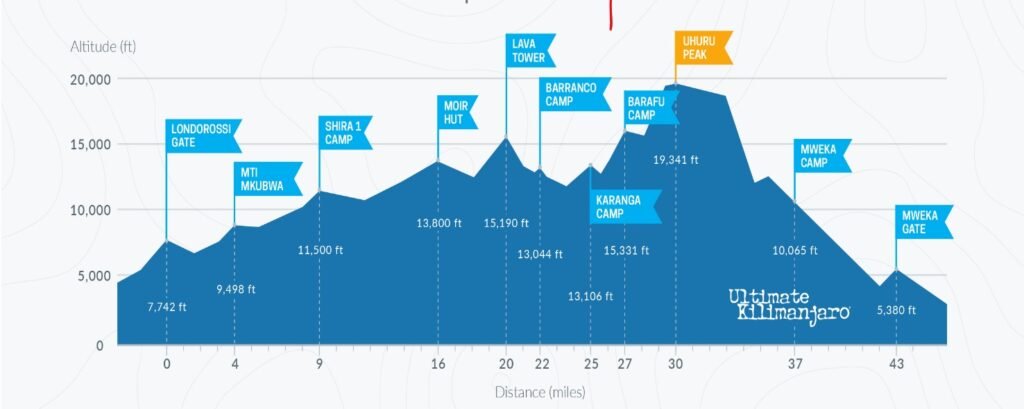
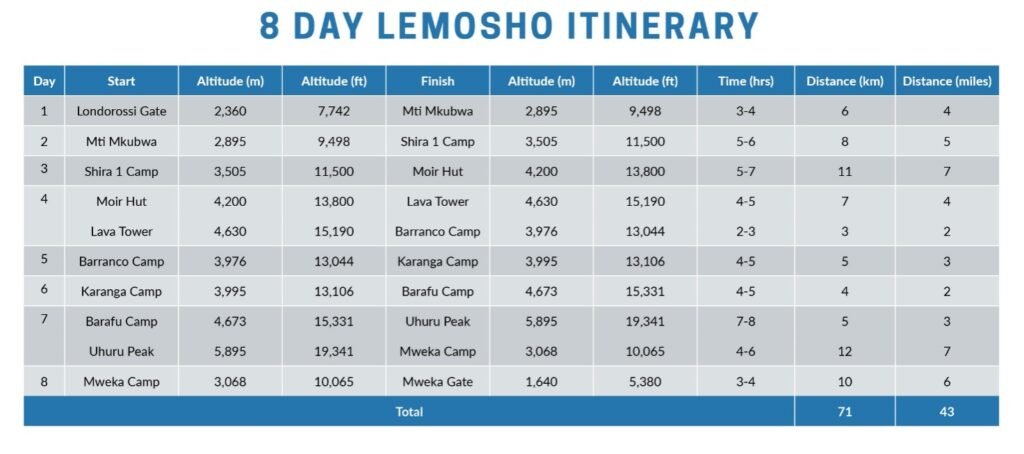
| Elevation 7,742 ft – 9,498 ft | Distance 6 km | 4 miles | Hiking Time 3–4 hours | Habitat Rain Forest |
We depart Moshi for Londorossi Gate, which takes about 4 hours, where you will complete entry formalities. Then
drive to the Lemosho trailhead. Upon arrival at trailhead, we begin hiking through undisturbed forest which winds
to the first camp site.
| Elevation 9,498 ft to 11,500 f | Distance 8 km | 5 miles | Hiking Time 6 hours | Habitat Heath |
We continue on the trail leading out of the rain forest and into a savannah of tall grasses, heather and volcanic rock draped with lichen beards. As we ascend through the lush rolling hills and cross several streams, we reach the Shira Ridge before dropping gently down to Shira 1 Camp. Here we catch our first glimpse of Kibo across the plateau.
| Elevation 11,500 ft to 13,800 ft | Distance 11 km | 7 miles | Hiking Time 5-7 hours | Habitat Heath |
| Elevation 13,800 ft to 15,190 ft | Distance 7 km | 4 miles | Hiking Time 4-5 hours | Habitat Alpine Desert |
| Elevation 15,190 ft to 13,044 ft | Distance 3 km | 2 miles | Hiking Time 2-3 hours | Habitat Alpine Desert |
| Elevation 13,044 ft to 13,106 ft | Distance 5 km / 3 miles | Hiking Time 4-5 hours | Habitat Alpine Desert |
| Elevation 13,106 ft to 15,331 ft | Distance 4 km / 2 miles | Hiking Time 4-5 hours | Habitat Alpine Desert |
| Elevation 15,331 ft to 19,341 ft | Distance 5 km / 3 miles | Hiking Time 7–8 hours | Habitat Arctic |
| Elevation 19,341 ft to 10,065 ft | Distance 12 km / 7 miles | Hiking Time 4-6 hours | Habitat Rain forest |
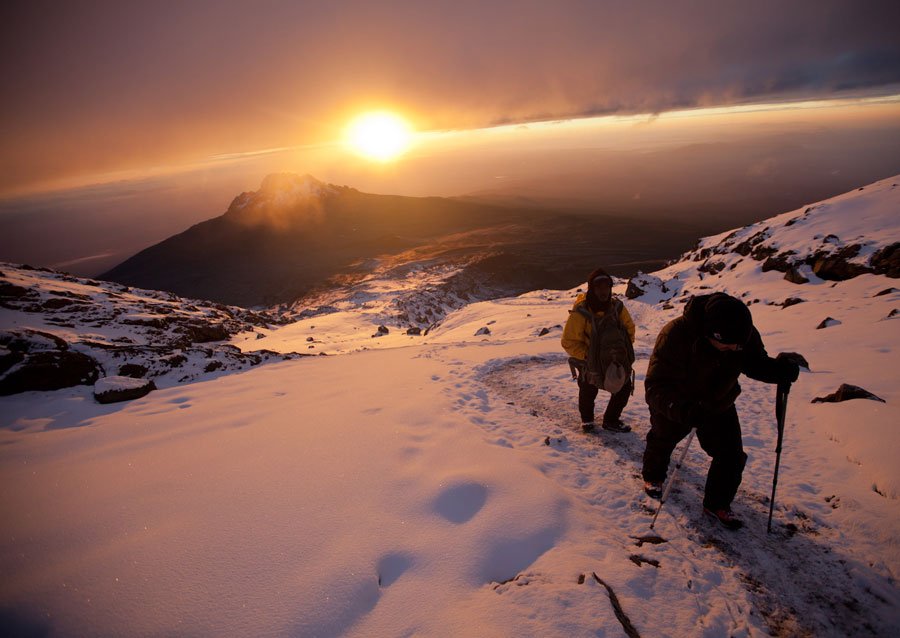
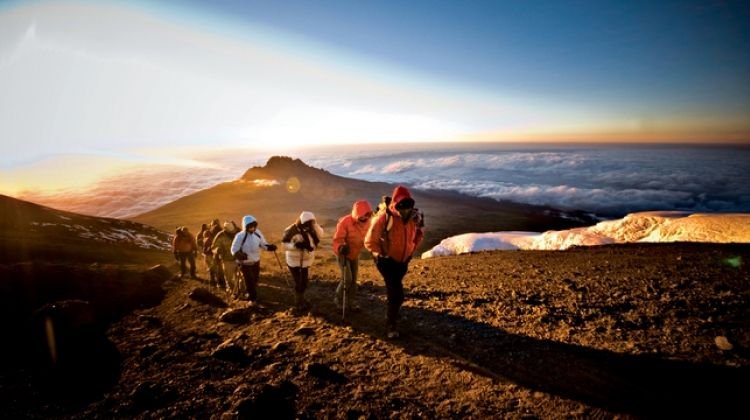
Very early in the morning (around midnight), we begin our push to the summit. This is the most mentally and physically challenging portion of the trek. The wind and cold at this elevation and time of day can be extreme. We ascend in the darkness for several hours while taking frequent, but short, breaks. Near Stella Point (18,900 ft), you will be rewarded with the most magnificent sunrise you are ever likely to see coming over Mawenzi Peak. Finally, we arrive at Uhuru Peak- the highest point on Mount Kilimanjaro and the continent of Africa.
From the summit, we now make our descent continuing straight down to the Mweka Hut camp site, stopping at Barafu for lunch. The trail is very rocky and can be quite hard on the knees; trekking poles are helpful. Mweka Camp is situated in the upper forest and mist or rain can be expected in the late afternoon. Later in the evening, we enjoy our last dinner on the mountain and a well-earned sleep..
| Elevation 10,065 ft to 5,380 ft | Distance 10 km / 6.2 miles | Hiking Time 3–4 hours | Habitat Rain Forest |
On the next day, you will be driven back to the airport for your flight home, leave on one of our safaris, or
fly onwards to the island paradise of Zanzibar.
The best vacation is the one you’ll never forget
Escape the ordinary and step into experiences that stay with you forever. From breathtaking destinations to moments that make you pause and smile, every journey is crafted to leave you with stories worth telling. Travel isn’t just about places—it’s about how they make you feel.